
Can Presbyopia Eye Drops Replace Reading Glasses?
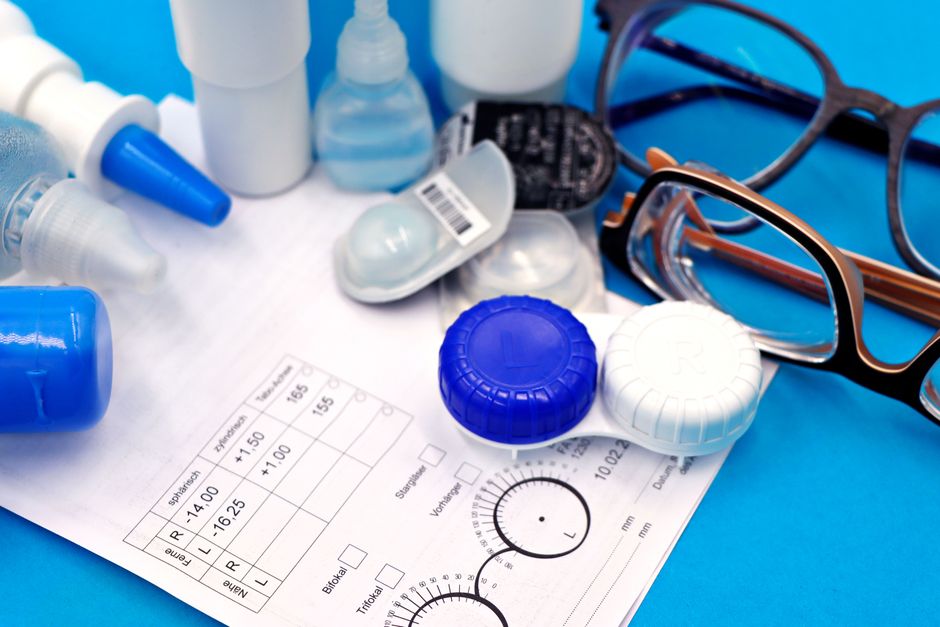
Prescription presbyopia drops can reduce reliance on reading glasses for some adults, but they do not reverse presbyopia or provide a permanent fix. VIZZ, an FDA-approved aceclidine drop, temporarily sharpens near vision by making the pupil smaller. Its effect varies by person, can dim vision in low light, and does not remove the need for an eye exam or for glasses in every task.
Can eye drops replace reading glasses?
No. Eye drops can replace reading glasses for selected near tasks during the period when the drug is working, not for presbyopia itself.
Presbyopia comes from an aging lens that no longer changes focus as freely. Aceclidine works by constricting the pupil. The smaller opening increases depth of focus, a pinhole effect described by the American Academy of Ophthalmology in 2025. The lens remains the same. The view through it changes.
That distinction sets a fair expectation. Reading glasses add optical power. These drops improve the range that appears clear at close distance. One tool changes the optics outside the eye. The other changes the aperture inside it.
In the FDA's 2025 CLARITY-1 trial, 65% of VIZZ participants gained at least three lines of near vision at 40 cm at three hours without losing at least one line of distance vision; the comparison-group rate was 12%. In the FDA's 2025 CLARITY-2 trial, the corresponding rates were 71% and 8%. Those are useful trial results, not a promise that every reader will get the same result.
| Question | What the evidence says |
|---|---|
| What changes? | The pupil becomes smaller, increasing depth of focus; the aging lens is not restored. |
| What did the trials measure? | Near-vision gain at 40 cm while distance vision was preserved. |
| What remains uncertain? | Long-term safety follow-up remains limited, according to a 2024 systematic review in PubMed. |
Glasses remain the simpler answer when clear vision is needed for a long stretch, in dim rooms, or whenever drops do not provide enough near vision. A short errand and an evening of fine print are different jobs. The tool should fit the job.
An eye-care professional also needs to judge the whole eye, not only the reading chart. The Academy notes that the pinhole effect can worsen vision when an early cataract is present. The best result on a near chart is not the whole result.
How long do Vizz eye drops last?
Vizz eye drops can improve near vision for hours, though duration differs between individuals.
The American Academy of Ophthalmology reported in 2025 that 71% of trial participants achieved a three-line or greater near-vision improvement at three hours, and 40% retained that gain at 10 hours. The same source says the response and duration vary by person.
The FDA's 2025 review frames the treatment as temporary improvement in near vision, not permanent correction of presbyopia. That matters when comparing drops with a pair of readers: glasses work when they are on; a drop's useful window is limited and personal.
VIZZ received FDA approval for presbyopia in adults on July 31, 2025. The FDA's 2025 approval materials describe controlled efficacy studies lasting six weeks and a safety study lasting 26 weeks. Those studies support the approved use. They do not answer every question about use over many years.
The 2024 systematic review reached the same boundary from another direction: more long-term follow-up is needed to assess safety and possible adverse effects of miotic presbyopia treatments. New treatment does not mean settled treatment.
Are presbyopia eye drops safe for night driving?
Presbyopia eye drops are not a reliable choice for night driving when vision is dim, dark, blurred, or slow to refocus.
The current DailyMed FDA-approved VIZZ label warns that temporary dim or dark vision can occur and says people should not drive or operate machinery if vision is not clear. It also calls for caution with night driving and hazardous activities in poor illumination.
This warning follows from the treatment's mechanism. A smaller pupil can help close work by increasing depth of focus. In low light, the same smaller pupil limits light entering the eye. Near clarity and night visibility are not the same question.
The practical comparison is plain. If an activity depends on dependable distance vision in poor light, glasses are not the issue; clear vision is. The label's warning governs that moment.
What are the side effects of aceclidine eye drops?
The most common reported aceclidine side effects are eye irritation, dim vision, headache, and eye redness.
In the VIZZ clinical trials summarized in the DailyMed label, common adverse reactions included instillation-site irritation in 20% of participants, dim vision in 16%, headache in 13%, conjunctival hyperemia in 8%, and ocular hyperemia in 7%. The FDA's 2025 Drug Trials Snapshot similarly lists irritation, visual impairment or dim vision, redness, and vitreous floaters among the most frequent treatment-emergent adverse events.
The serious warning deserves equal space. DailyMed states that rare retinal tears and detachments have been reported with miotics, especially in susceptible people and those with pre-existing retinal disease. It advises a retinal examination before treatment for every patient.
Sudden flashing lights, new floaters, or vision loss call for immediate medical care under the label. The label also advises caution for people with a history of iritis. These are not details to skim past because the medicine is used for reading.
For a budget-minded comparison, the cost question alone is incomplete. The real comparison includes convenience, the need for an eye examination, the chance of side effects, and whether the result fits the tasks that fill a normal day. The same plain comparison helps in other purchase decisions, such as how to compare gold bar prices before buying physical gold: the visible price is one part of the decision, not the decision itself.
Frequently Asked Questions
Can I wear contact lenses with presbyopia eye drops?
The current FDA-approved VIZZ label says contact lenses should be removed before use. They can be put back in only after the label's stated waiting period, so the current prescribing information is the source to follow.
Who should have a retinal exam before using reading-glasses eye drops?
The FDA-approved VIZZ label advises a retinal examination for every patient before treatment begins. This carries added weight for people with pre-existing retinal disease, because rare retinal tears and detachments have been reported with miotics in susceptible people.
Will I still need glasses after using presbyopia drops?
Many people will still use glasses for some work. The American Academy of Ophthalmology says response and duration differ by person, and some people still need distance glasses or find glasses more practical for sustained tasks.
Sources
- U.S. Food and Drug Administration: Drug Trials Snapshots: VIZZ
- DailyMed, National Library of Medicine: VIZZ Prescribing Information
- American Academy of Ophthalmology: Could Eye Drops Replace Glasses for Presbyopia?
- PubMed: An Updated Systematic Review of Pharmacological Treatments for Presbyopia
Disclaimer: This article is for general information only and is not medical advice. It is not a substitute for diagnosis or treatment by a qualified healthcare professional. Always speak to your doctor before acting on anything you read here.